During Hispanic Heritage Month, the library media specialists created an engaging event to celebrate and inform people about Hispanic heritage and culture.
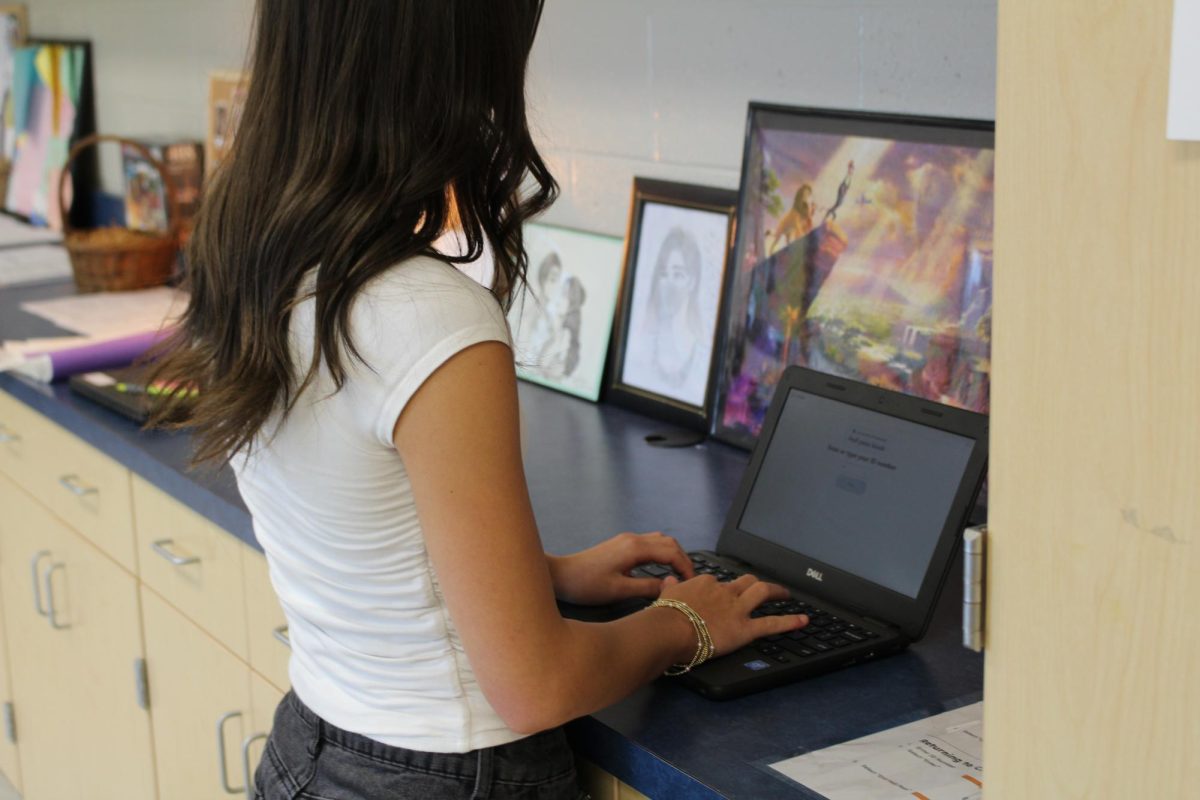
Throughout the escape room event, students worked in groups and read articles, deciphering the codes to educate themselves while simultaneously unlocking the next challenge. The students got to learn more about Cesar Chavez and the protests he led while also having fun and problem solving.
With over half of the school’s population being Hispanic American students, the library staff decided that the best way to foster a sense of belonging was to ensure the activities directly reflected the community. This proactive approach by the library aims to make the media center a more welcoming and relevant space for its largest demographic.
“Approximately a little over 50% of the RHS population are Hispanic American students. We want to make sure that as much, if not more, of our content is specifically targeted towards that population, because you need to be represented within the walls of the library,” said Hallie Jarvis, RHS library media specialist.
The implementation of the new Hispanic Heritage event at Rogers High was not a spontaneous decision but the result of careful, long-term planning. The library staff knew that to make a meaningful impact during the school year, they had to start preparing well in advance of the traditional commemorative months.
“We started last spring because we knew Hispanic Heritage Month is always the 15th of October, so we try to do things like a quarter ahead. And so at the end of last year, we were planning for the beginning of this year,” Jarvis said.
The drive for better representation isn’t just about statistics for the library staff; it’s rooted in personal experience. For RHS library media specialist Heather Peters, the importance of cultural exposure began in her own childhood. Peters recalled her earliest memories of being introduced to Hispanic American culture from when she was very young, explaining that her exposure to diverse beliefs, traditions and values was significant to her understanding of cultural relativism.
Just being brought into the homes of her neighbors showed her there was complexity to everyone and there was a deeper and richer tapestry of things to experience in the world, said Heather Peters, RHS library media specialist.
The push for representation further connects to a core American ideal. Library media specialist Heather Peters framed the initiative in the context of the nation’s identity, arguing that cultural inclusiveness is essential to the community’s overall health and vitality.
“We are a melting pot here in the United States. What we were built on was being this melting pot of all sorts of different communities coming together to create one amazing place. And sometimes we forget that if you take out one piece of what we try to do, part of it loses its depth, and it loses its color and it loses its vibrance,” Peters said.
Teachers balance heavy workloads and a full curriculum, and critical cultural education often struggles to find dedicated time in the classroom. This reality is what spurred the Rogers High library staff to step up, ensuring important cultural topics aren’t overlooked.
It is crucial to have learned about the majority of the RHS student body. The teachers have too much work going on, that important topics such as Hispanic culture don’t get the light it deserves. So, having activities to represent these cultures is very beneficial, Jarvis said.
Ultimately, the work being done at the Rogers High library is about more than just checking books out of a collection; it is an effort to deepen the emotional connection and understanding between students and the community. Library media specialist Heather Peters stressed that the true value of celebrating diverse cultures lies in the knowledge gained and the perspective broadened.
“I would hope that anytime we celebrate Hispanic Heritage Month the people of our community grow deeper in their knowledge of what our Hispanic Heritage neighbors revere, and what they come from, and the stories that they have to tell. I think the more things that we know, the better we all are, the greater our empathy is for the different paths that we follow,” Peters said.